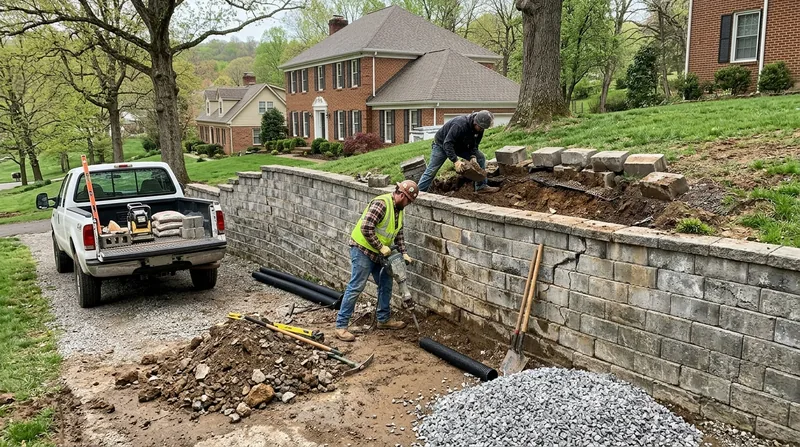




Leaning & Collapsed Wall Repair in Lexington: When the Wall Tells You It's Done
Lexington walls sit on thin silty topsoil over sticky clay and karst limestone, and that geology is unforgiving. Water loads the clay behind a wall, freeze-thaw cycles in January and February pry at the joints, and spring rain pushes everything toward the downhill side. When a wall starts leaning, bulging, or drops a section into the swale, you need Leaning & Collapsed Wall Repair in Lexington before the failure spreads to the footing or the structure above it.
We handle the emergency side of retaining wall work: stabilization with tieback anchors, drainage correction to relieve hydrostatic pressure, and partial or full rebuilds when a wall is past saving. We work the Federal and Victorian brick blocks around Gratz Park, the Tudor and Colonial Revival lots in Ashland Park and Chevy Chase, the brick ranches of Southland and Lansdowne, and the segmental block terraces in Hamburg and Masterson Station.
If the wall is still standing but out of plumb, that is the cheapest moment to call. Start with our retaining wall repair service or call (859) 710-8778.
Why Walls Fail Here: Bluegrass Clay, Karst Limestone, and Freeze-Thaw
The dominant failure mode in Lexington is hydrostatic pressure in water-logged clay. Silty topsoil sheds water fast until it hits the clay subsoil, and then it sits. Behind an old dry-laid limestone fence or a 1970s railroad tie terrace, that trapped water pushes the wall forward a fraction of an inch at a time. Add sinkhole settlement on the karst and the freeze-thaw cycle that opens joints every winter, and a wall that looked fine in October is leaning by April.
- Water-logged clay behind the wall pushes the face out and bows the middle.
- Freeze-thaw cycles open mortar joints and shift block courses out of line.
- Sinkhole settlement drops a footing section and cracks the wall above it.
- Clogged or missing weep holes and drain tile let pressure build with nowhere to go.
- Rotting timber and railroad tie walls lose section and lean into the slope.
Every one of those failure modes gets worse with time and rain, so the repair gets more expensive the longer it sits.
Key info: A Chevy Chase homeowner called us about a 3-foot limestone garden wall that had bulged 2 inches over one wet spring. We relieved the pressure with new drain tile and gravel, reset the displaced stone, and tied the face back with anchors. Waiting another season would have meant a full rebuild.
For official guidance on when a wall needs a permit or engineered drawings, check the Lexington-Fayette Urban County Government building department before you schedule work.
How We Stabilize and Rebuild a Failing Wall in Lexington
We start by finding out why the wall moved, not just where it moved. That means probing the soil behind it, checking the drain path, and looking at the footing for sinkhole settlement or shallow rock. From there we pick the least invasive fix that will actually hold, because tearing out a sound wall is a waste of your money.
- We inspect the wall, the footing, and the drainage path, and we photograph the failure for your records.
- We relieve the pressure first by clearing weep holes and installing drain tile and gravel where it is missing.
- We stabilize the face with tieback anchors or helical anchors when the wall can be saved in place.
- We rebuild the failed section or the full wall when the footing or the block is past saving.
- We restore the surface, reset the cap, and confirm water runs away from the wall before we leave.
Most jobs finish with a wall that is straighter, drier, and better drained than it was before it started leaning.
Key info: In a Lansdowne backyard, a 4-foot poured concrete wall had cracked along a sinkhole seam and leaned toward the patio. We underpinned the footing, replaced the cracked section, and added drainage behind the wall. The patio stayed in service the whole time.
If the drainage is the root cause, our retaining wall drainage service covers the tile, gravel, and outlet work that keeps pressure off the face.
Repair Approaches We Use on Lexington Walls
The right approach depends on how far the wall has moved, what it is built from, and what it is holding up. A dry-laid limestone fence in the historic districts gets treated differently from a segmental block terrace in Beaumont or a railroad tie wall in a 1970s subdivision.
| Approach | Description | Best for |
|---|---|---|
| Tieback anchoring | Anchors driven into stable soil or rock behind the wall and tied to the face to stop movement. | Leaning or bulging walls with a sound footing. |
| Drainage correction | New drain tile, gravel, and weep holes to relieve hydrostatic pressure behind the wall. | Walls weeping, staining, or bowing after heavy rain. |
| Partial rebuild | Remove and rebuild only the failed section, matching the existing material and coursing. | Localized collapse or a single cracked run. |
| Full rebuild | Tear out and rebuild the wall with a proper footing and drainage system. | Walls past saving or failed at the footing. |
| Material conversion | Replace rotting timber or railroad tie walls with block, concrete, or stone. | Aging timber terraces that keep leaning. |
We match the repair to the wall, so a historic limestone fence keeps its look while a modern block terrace gets the anchoring and drainage it was missing.
Leaning & Collapsed Wall Repair Cost in Lexington: What to Expect
Most leaning and collapsed wall repairs in Lexington start at $2,500, and that figure covers the common case: a wall under about 4 feet with a drainage problem and a section that needs resetting or rebuilding. The price climbs with wall height, length, access, and what the wall is holding up. A wall supporting a driveway or a structure needs engineering and heavier anchoring, and a steep Kentucky River gorge lot or a tight Chevy Chase side yard slows the work down.
Timber and railroad tie walls often cost more to fix than to convert, because the rot runs deeper than what you can see. Sinkhole settlement under a footing adds underpinning to the scope. Get two or three written estimates, ask each one what they found behind the wall, and compare the drainage scope line by line. Our pricing overview breaks down how we build an estimate.
Leaning & Collapsed Wall Repair Near Me: How to Vet a Contractor Near Lexington
When you search for leaning and collapsed wall repair near me, you get a lot of names and very little proof. Ask three things before anyone touches the wall. First, confirm the contractor is fully insured and ask for the certificate, not just a verbal yes. Second, get two or three written estimates that separate stabilization, drainage, and rebuild costs so you can compare them honestly. Third, ask for references from jobs in your part of town and call them.
Permits matter here. Walls above roughly 4 feet measured from the footing, or walls that support a surcharge like a driveway or structure, often need a permit, and tall or tiered walls may need engineered drawings. Verify the current threshold with the local building department before work starts. If your wall sits in a historic district or an HOA subdivision, check those rules too. We can walk you through what applies to your property when we come out.
Ready to get the wall looked at? Reach out through our contact page or call (859) 710-8778.
Leaning & Collapsed Wall Repair in Lexington: Pricing Guide
| Service | Price | Details |
|---|---|---|
| Drainage correction and section reset | Starting at $2,500 | Covers drain tile, gravel, weep holes, and resetting a failed section on walls under 4 feet. |
| Tieback anchoring | Starting at $3,200 | Anchors and face plates to stop a leaning wall; price rises with wall height and soil depth. |
| Partial rebuild | Starting at $4,500 | Rebuild of a collapsed run with matched material; access and wall length drive the number up. |
| Full rebuild or material conversion | On estimate | Footing failure, sinkhole settlement, or timber replacement needs an on-site look before pricing. |
| Travel | Included | in Lexington and surrounding areas, no separate call-out or mileage fee |
| Estimate | Free | Response within 24h at (859) 710-8778, no obligation to book |
Indicative pricing, the exact cost depends on square footage, finish, and site access. Free personalized estimate within 24h at (859) 710-8778.


